Category: Business

  • FROM RECOVERY TO MOMENTUM: 

    FROM RECOVERY TO MOMENTUM: 


    Setting our sights on 2026/27

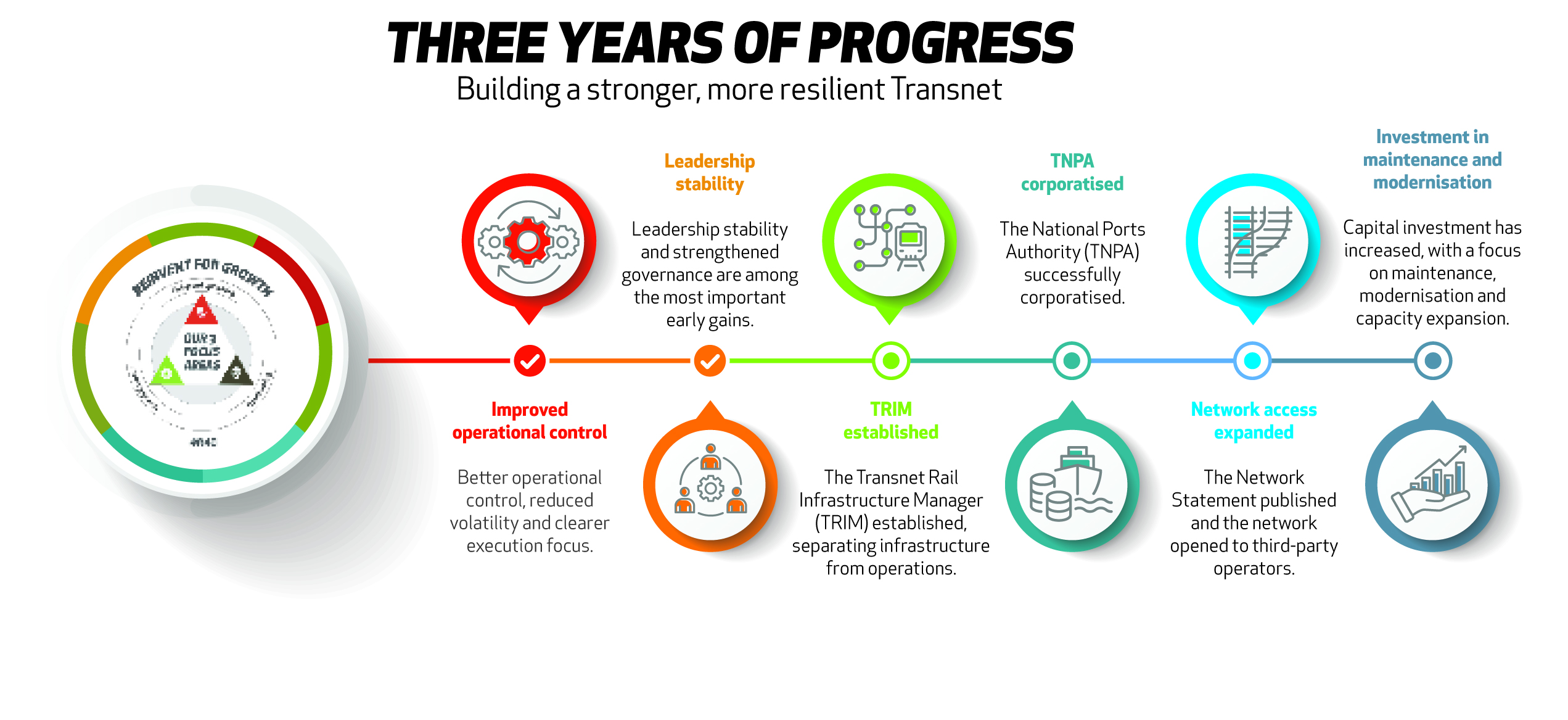
    Over the past three years, Transnet has focused on stabilising operations, rebuilding confidence and laying the foundation for long-term growth. Now, as we enter the 2026/27 financial year, the focus has shifted to stronger performance, operational delivery and sustainable growth.

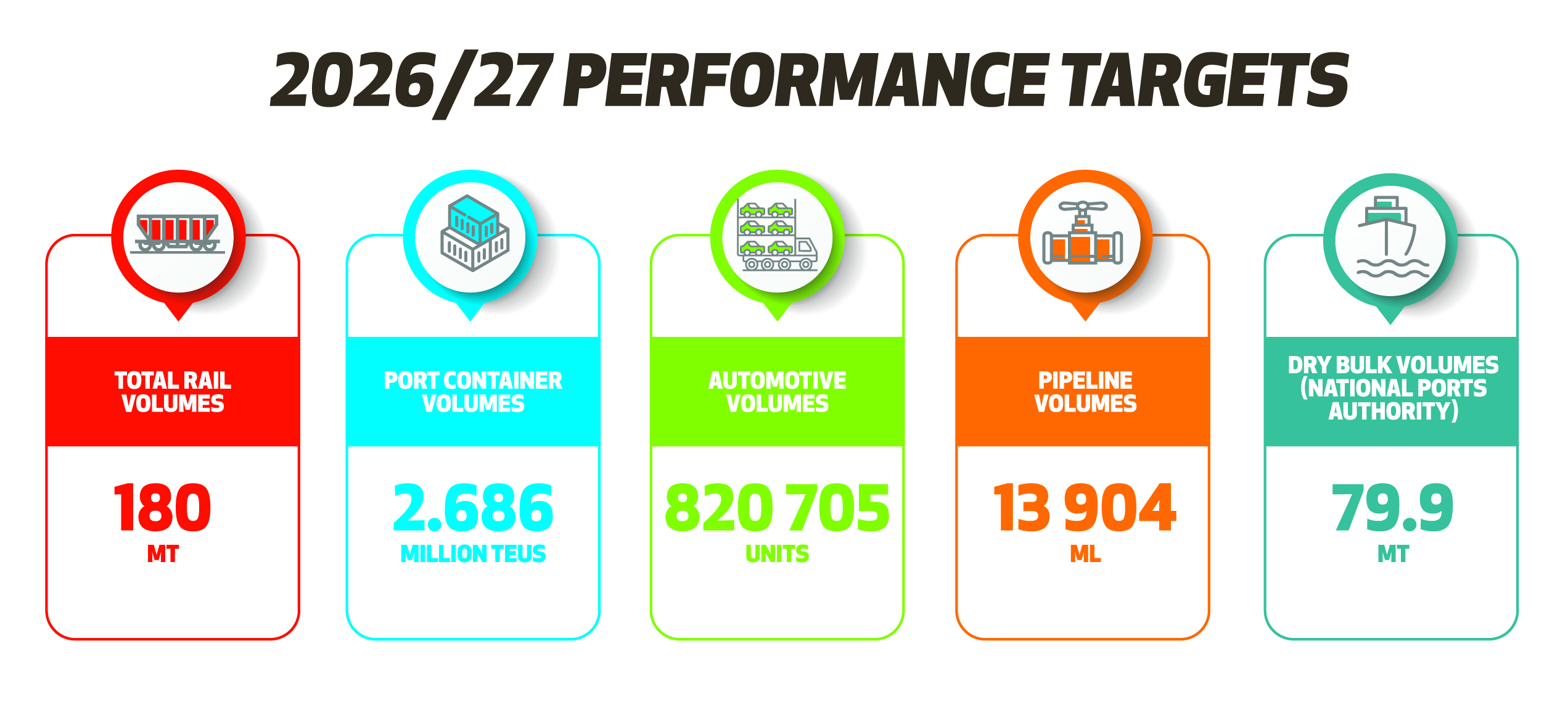
    The latest performance targets, shared as part of the Reinvent for Growth (R4G) strategy, reflect a continued focus on improving rail, port and pipeline performance. The intent is to strengthen Transnet’s role in supporting South Africa’s economy through more reliable and efficient operations.

    Since the launch of the Recovery Plan and the R4G strategy, Transnet has made measurable progress across the following key areas:

    The Recovery Plan has also helped restore confidence among customers, government and private-sector partners, while creating a clearer sense of direction across the organisation.

    Importantly, behind every operational milestone lies something even more important: the people driving the work forward every day.

    Transnet’s latest performance targets highlight focus areas for the year ahead:

    These targets will guide Transnet’s operations throughout the financial year. Employees are encouraged to continuously monitor performance and identify challenges early, maintaining a strong focus on execution and accountability.

    As we continue to build towards long-term

    sustainability, Transnet remains focused on

    performance, safety and employee wellbeing.

    Safety remains a key priority across operations, alongside ongoing efforts to support employees’ health, wellness and resilience in demanding working environments.

    The message is clear: long-term success depends not only on operational improvement, but also on creating a workplace where people feel supported, empowered and united behind a shared purpose.

    With the next phase of the R4G journey now underway, collective effort across the organisation will remain critical in driving Transnet forward. 

    Behind every operational milestone are the people driving the work forward every day.

  • TRIM Corporatisation Journey

    TRIM Corporatisation Journey


    An update from the TRIM Chief Executive

    Transnet Rail Infrastructure Manager (TRIM) continues to make steady progress in its corporatisation journey, marking an important milestone in building a more efficient, transparent and competitive rail network for South Africa.

    Over the past few months, significant strides have been made in establishing TRIM as a standalone entity. This has included strengthening governance structures, refining operating models and enhancing systems that support open access and improved service delivery. The transition is not only about organisational change, but also about positioning TRIM to better serve customers, stimulate economic growth and contribute to a sustainable future for rail.

    As part of this process, TRIM will become a wholly owned subsidiary of Transnet. This follows the vertical separation of TRIM and Transnet Freight Rail (TFR) in October 2024, which established the two as distinct operating divisions.

    The corporatisation initiative forms part of the South African government’s broader rail reform programme and aligns with the National Rail Policy White Paper 2022, the Economic Regulation of Transport Act, 2024, and the Freight Logistics Roadmap for South Africa, 2023.

    These reforms are aimed at improving operational efficiency, infrastructure performance, safety and competitiveness across the rail sector.

    Through corporatisation, TRIM is being positioned as a financially sustainable entity capable of generating revenue, managing operations independently and implementing regulated access fees that will improve the competitiveness of rail services.

    The new model also creates a clear separation of responsibilities. TRIM will oversee the ownership, management and maintenance of the national rail network, while TFR and other train operating companies will utilise the infrastructure to provide freight transportation services.


    Mohato wa ho fetohela khamphaning ya kgwebo ke karolo ya lenaneo la Afrika Borwa la tlhophobotjha e pharaletseng ya tsamaiso ya diterene mme le dumellana le Pampiri e Tshweu ya 2022 ya Leano la Naha la Tsamaiso ya Diterene, Molao wa Taolo ya Moruo wa Dipalawang wa 2024, le Mmapa wa Tsela wa Tsamaiso ya Thepa bakeng sa Afrika Borwa, wa 2023.

    Tlhophobotjha ena e reretswe ho ntlafatsa mokgwa wa ho sebetsa ka tsela e atlehileng, tshebetso ya meralo ya motheo, polokeho le ho qothisana lehlokwa sekthareng ya tsamaiso 

    ya diterene.

    Ka ho fetohela khamphaning ya kgwebo, TRIM e behwa boemong ba ho ba mokgatlo o tsitsitseng ditjheleteng o kgonang ho hlahisa lekeno, o tsamaisang mesebetsi ka tsela e ikemetseng le ho kenya tshebetsong ditefello tse laolwang tsa tshebediso ya diporo, tse tla ntlafatsa ho qhothisana lehlokwa ditshebeletsong tsa tsamaiso ya diterene.

    Tlhophiso ena e ntjha e boetse e arola boikarabelo ka ho hlaka. TRIM e tla okamela taba ya ho ba beng ba kgwebo, tsamaiso le tlhokomelo ya neteweke ya tsamaiso ya diterene ya naha, athe TFR le dikhamphani tse ding tsa tshebediso ya diterene di tla sebedisa meralo ya motheo ho fana ka ditshebeletso tsa ho tsamaisa thepa. 


    Corporatisation is expected to unlock greater open access to the rail network, encourage private sector investment and partnerships, and support infrastructure rehabilitation and renewal based on commercial viability and long-term sustainability.

    Transnet has reiterated that the corporatisation of TRIM does not constitute privatisation. TRIM will remain a state-owned entity, with the process aimed at creating a more accessible, efficient and competitive rail system.

    The initiative also introduces transparent competition and regulated access fees while creating opportunities for collaboration with the private sector on infrastructure upgrades and renewal projects where funding constraints currently exist.


    Abakwa-Transnet baphinde baqinisekisa ukuthi abasebenzi bahlala bebalulekile ekusebenzeni ngempumelelo kwale nkampani nasekulandeleni uhlelo Lokusungulwa Kabusha Kokukhula. Okubalulekile, izinguquko kule nkampani ngeke ziholele ekulahlekelweni kwemisebenzi,nasezinguqukweni kwezikhundla ezikhona njengamanje noma ekuncishisweni kwezinhlelo zemihlomulo zabasebenzi.

    Izimo abasebenzi abaqashwe ngaphansi kwazo ngeke ziguquke, nokuyilapho imihlomulo yabo ekhona ngaphansi kwe-Transnet Medical Aid kanye ne-Transnet Retirement Fund izohlala injalo. Iminyaka abasebenzi asebeyisebenzile izohlala injalo, namathuba okwenyuselwa ezikhundleni eziphezulu kanye nokumelwa okukhona ngaphansi kwezivumelwane ezenziwa ngokuhlanganyela e-Transnet ngeke kushintshe.

    Le nhlangano iqinisekise abasebenzi ukuthi amalungelo abo, nokuphepha kwemisebenzi yabo, nemihlomulo kanye nokuqashwa kwabo kule nkampani kuzohlala kuvikelekile ngokugcwele ngaso sonke isikhathi sokwenziwa kwezinguquko. 


    Transnet has reaffirmed that employees remain central to operational success and the Reinvent for Growth Strategy. Importantly, the corporatisation process will not result in job losses, changes to current role structures or a reduction in employee benefits.

    Employment conditions will remain unchanged, while benefits under the Transnet Medical Aid and the Transnet Retirement Fund will continue as normal. Employees will also retain their years of service, career progression opportunities and representation under existing Transnet recognition and collective agreements.

    The organisation has assured employees that their rights, job security, benefits and place within the organisation will remain fully protected throughout the transition.

    The corporatisation process will be implemented in phases to ensure legal, operational and financial readiness. These phases include pre-incorporation, incorporation and post-incorporation.

    To ensure long-term value and accountability, robust regulatory frameworks, transparent reporting mechanisms and independent oversight structures will remain in place. This approach is designed to promote fair pricing, prevent monopolistic practices and align commercial objectives with broader public service responsibilities.

    Employee commitment, resilience and professionalism continue to play a vital role in the success of the transformation journey and in building a stronger, more responsive organisation.

    The corporatisation journey represents a significant step towards laying the foundation for a modernised, sustainable and growth-oriented rail sector that will better serve South Africa for generations to come. 


    Ukuzibophelela kwabasebenzi, ukomelela nobungcali kuyaqhubeka ngokudlala indima ebalulekileyo kwimpumelelo yohambo lwenguqu nokwakha umbutho owomele nangakumbi, nosabela nangakumbi.

    Uhambo lokusiguqulela ekubeni sibe liqumrhu loshishini luza nenyathelo elibalulekileyo elisingise ekubekeni isiseko sokuba sibe licandelo loololiwe eliphuculiweyo, elizinzileyo nelijolise kuhlumo neliya kusebenzela uMzantsi Afrika ngcono nakwizizukulwana ezizayo. 


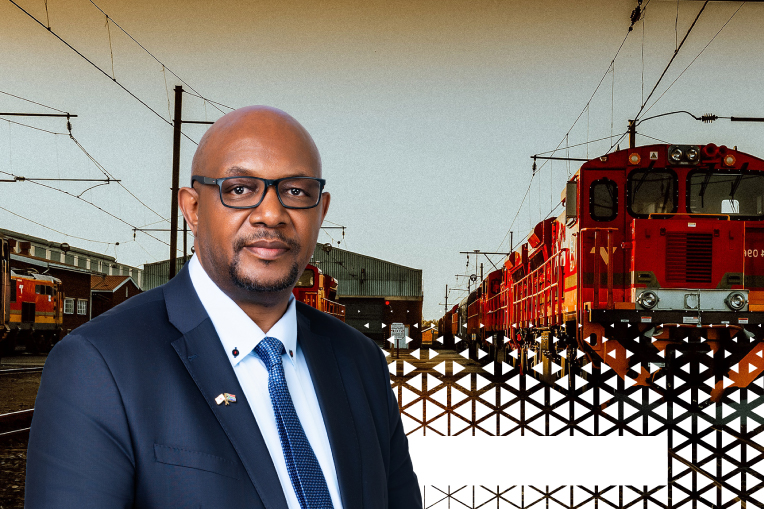
    Moshe Motlohi 

    Transnet Rail Infrastructure Manager (TRIM) 

    Chief Executive

  • Building A Competitive Rail Future Through Open Access:

    Building A Competitive Rail Future Through Open Access:

    TRIM accelerates rail reform with 11 new train operating companies

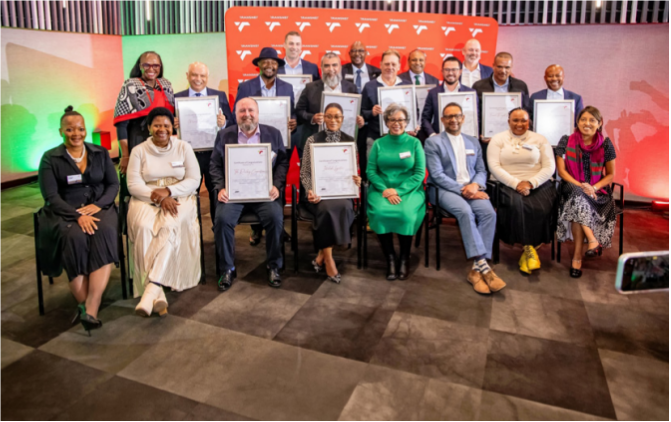
    Transnet Rail Infrastructure Manager (TRIM) has concluded Rail Access Agreements with 11 new Train Operating Companies (TOCs), marking a major milestone in South Africa’s rail reform programme. The move signals the transition from policy to implementation, unlocking new investment, increasing network capacity and strengthening collaboration across the logistics sector.

    TRIM Advances Rail Reform with New TOCs Onboarded

    Transnet Rail Infrastructure Manager (TRIM) has reached a significant milestone in South Africa’s rail reform journey with the successful conclusion of Rail Access Agreements (RAAs) with 11 new Train Operating Companies (TOCs).

    The agreements increase the number of active operators on the national rail network from one to 12 and are expected to unlock an additional 24 million tonnes of freight capacity, with the potential to scale to 52 million tonnes over the next five years. This supports the national objective of increasing rail volumes from approximately 180 million tonnes to 250 million tonnes by 2030.

    The newly onboarded TOCs include ARC South Africa, The Railway Corporation, MSC, TLD Marine, MENAR, Sharp Logistics, Barberry, Grindrod, Minrail, IRACEMA, Motheo Logistics and Interlinks. Together, they will operate across strategic freight sectors including coal, manganese, containers, fuel and general freight.

    From Reform to Implementation

    Addressing stakeholders at the event, Transnet executives led by Group Chief Executive Adv Michelle Phillips emphasised that rail reform has moved beyond policy development into practical implementation.

    TRIM Chief Executive Moshe Motlohi described the milestone as the creation of “a functional and competitive rail marketplace” that enables meaningful private sector participation and investment.

    The implementation of Network Statement Version 3 and the structured slot allocation process has enabled transparent access to rail capacity, while work on Version 4 is at an advanced stage following extensive industry consultation.

    Unlocking Capacity Through Open Access

    A key development in the reform process has been the introduction of TRIM’s Ad Hoc Slot Allocation process, launched in December 2025, the rules-based mechanism enables operators to apply for rail capacity outside the annual allocation cycle, improving flexibility and responsiveness to market demand.

    The process has already unlocked opportunities such as a proposed short-haul service between Cato Ridge and Durban aimed at reducing congestion around the port precinct.

    Some TOCs are expected to commence operations before the end of 2026, with additional operators coming online during 2027.

    LEASECO to Lower Barriers to Entry

    Another major focus of the event was the progress made on the Rolling Stock Leasing Company (LEASECO), which will provide operators with flexible leases for locomotives and wagons, lowering barriers to entry for new TOCs.

    Transnet has already identified and assessed more than 500 locomotives and over 17 000 wagons for the platform, while early market demand indicates strong appetite from operators. At least five TOCs have already signed up to source rolling stock through LEASECO.

    Executives also confirmed that the Request for Proposal (RFP) process for private sector partners is progressing, with the joint venture expected to support regional growth across South Africa and neighbouring markets.

    Engineering and Infrastructure at the Centre

    Transnet Engineering reiterated its role as the industrial backbone of the freight rail system through the refurbishment, maintenance and manufacturing of rolling stock.

    Executives highlighted the importance of local manufacturing capability, engineering expertise and supplier development in supporting rail reform and broader industrialisation objectives.

    TRIM also outlined ongoing investments in signalling systems, condition-monitoring technology and corridor upgrades to improve network reliability and increase capacity across strategic freight routes.

    A Shared Commitment to Growth

    Speakers repeatedly emphasised that rail reform is not only about Transnet or the private sector, but about enabling economic growth, industrial expansion and regional integration.

    The event concluded with a strong message of collaboration and accountability, with Transnet reaffirming its commitment to accelerating reform, enabling private sector participation and building a modern, resilient and competitive rail system for South Africa.


    The Rolling Stock Leasing Company (LEASECO) will provide train operators with access to locomotives and wagons through flexible leasing arrangements, helping lower barriers to entry into the rail sector.

    Rolling Stock Leasing Company (LEASECO) i do netshedza vhatshimbidzi vha zwidimela thendelo ya u shumisa matorokisi na zwigariki nga u shumisa ndugiselelo dza khadzimo dzi tendelanaho na nyimele, u itela u fhungudza zwithivheli zwa u dzhena kha sekithara ya zwidimela.


    Rail Access Agreements are formal agreements that allow Train Operating Companies to access and operate on South Africa’s national rail network.

    Mintwanano yo Nghena ka Switimela i mintwanano ya ximfumo leyi pfumelelaka Tikhamphani to Fambisa Switimela ku nghena ni ku tirha eka netiweke ya swiporo ya tiko ya Afrika Dzonga.


    Train Operating Companies (TOCs) are operators authorised to run freight services on the rail network using TRIM infrastructure.

    Tinkapane Leticondzisa Kusebenta Kwetitimela (TOCs).Tinkapane leticondzisa kusebenta kwetitimela (TOCs), bacondzisi labagunyatwe kutsi banikete lusito lwetekutfutsa imitfwalo ngetitimela basebentisa imigwaco ye-TRIM.


    Rail reform refers to the transformation of South Africa’s rail sector to improve efficiency, expand access, encourage investment and strengthen economic growth through a more competitive rail system.

    Spoorhervorming verwys na die transformasie van Suid-Afrika se spoorsektor om doeltreffendheid te verbeter, beter toegang te gee, belegging aan te moedig en ekonomiese groei te bevorder deur middel van ’n mededingender spoorstelsel.