
Tag: Featured

  • Three Decades of Resilience and Growth

    Three Decades of Resilience and Growth

    From Chatsworth to the Port of Durban: Veni Pillay’s Journey of Purpose and Resilience

    Veni Pillay, Specialist – Customer Growth and Freight Solutions at Transnet Port Terminals (TPT), plays a pivotal role in driving container volumes through the Port of Durban. Her work focuses on developing integrated road and rail solutions to ensure the efficient movement of cargo, supporting both port performance and the broader economy.

    I am a third-generation South African of Indian descent. My great-grandmother arrived in Durban as an infant aboard a ship carrying indentured labourers, while my great-grandfather, then five, travelled with his family.

    I was born in 1967 and grew up in Chatsworth during apartheid, where Indian South Africans were placed under the Group Areas Act. I attended Chatsworth Primary School and Protea High School, and matriculated from Centenary Secondary School.

    I joined Portnet in 1994 as a temporary employee through Kelly Services, at a time when South Africa had just transitioned to democracy. The period created new opportunities for previously disadvantaged individuals and marked the beginning of my journey within the organisation.

    As a working mother, I pursued my studies through Transnet’s bursary programmes while raising young children. The support of my husband, children and extended family helped me through challenging moments.

    My advice to others is to understand your limits, but also challenge yourself to go beyond them. With the right support structure, you can achieve more than you think.

    The most rewarding aspect of my role is contributing to increased volumes through the Port of Durban and, in turn, supporting the country’s economy.

    The role also requires constant adaptability. Global geopolitical shifts, evolving trade routes, shipping tariffs and maritime regulations all influence the South African logistics landscape. Staying informed and responsive is essential.

    My diagnosis was overwhelming, and I initially struggled with anxiety and uncertainty. With no family history, it came as a shock.

    Beyond my own fears, I had to remain strong for my children and family. It can be a silent and deeply personal journey, often accompanied by fear of the unknown. However, having a transparent and supportive medical team made a significant difference in helping me navigate treatment and recovery.

    I find balance through simple but meaningful activities. Gardening – especially hydroponics – has become a rewarding passion, allowing me to see something grow from the ground up.

    I also prioritise my wellbeing by walking on the beach, spending time in nature and practising Pilates twice a week. These moments help me reset and manage stress.
  • Building A Competitive Rail Future Through Open Access:

    Building A Competitive Rail Future Through Open Access:

    TRIM accelerates rail reform with 11 new train operating companies

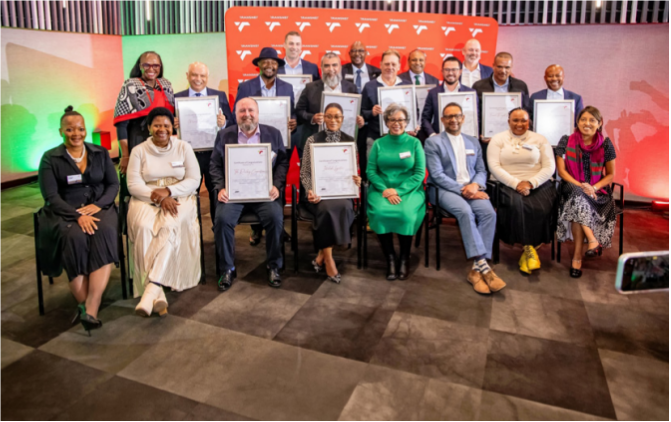
    Transnet Rail Infrastructure Manager (TRIM) has concluded Rail Access Agreements with 11 new Train Operating Companies (TOCs), marking a major milestone in South Africa’s rail reform programme. The move signals the transition from policy to implementation, unlocking new investment, increasing network capacity and strengthening collaboration across the logistics sector.

    TRIM Advances Rail Reform with New TOCs Onboarded

    Transnet Rail Infrastructure Manager (TRIM) has reached a significant milestone in South Africa’s rail reform journey with the successful conclusion of Rail Access Agreements (RAAs) with 11 new Train Operating Companies (TOCs).

    The agreements increase the number of active operators on the national rail network from one to 12 and are expected to unlock an additional 24 million tonnes of freight capacity, with the potential to scale to 52 million tonnes over the next five years. This supports the national objective of increasing rail volumes from approximately 180 million tonnes to 250 million tonnes by 2030.

    The newly onboarded TOCs include ARC South Africa, The Railway Corporation, MSC, TLD Marine, MENAR, Sharp Logistics, Barberry, Grindrod, Minrail, IRACEMA, Motheo Logistics and Interlinks. Together, they will operate across strategic freight sectors including coal, manganese, containers, fuel and general freight.

    From Reform to Implementation

    Addressing stakeholders at the event, Transnet executives led by Group Chief Executive Adv Michelle Phillips emphasised that rail reform has moved beyond policy development into practical implementation.

    TRIM Chief Executive Moshe Motlohi described the milestone as the creation of “a functional and competitive rail marketplace” that enables meaningful private sector participation and investment.

    The implementation of Network Statement Version 3 and the structured slot allocation process has enabled transparent access to rail capacity, while work on Version 4 is at an advanced stage following extensive industry consultation.

    Unlocking Capacity Through Open Access

    A key development in the reform process has been the introduction of TRIM’s Ad Hoc Slot Allocation process, launched in December 2025, the rules-based mechanism enables operators to apply for rail capacity outside the annual allocation cycle, improving flexibility and responsiveness to market demand.

    The process has already unlocked opportunities such as a proposed short-haul service between Cato Ridge and Durban aimed at reducing congestion around the port precinct.

    Some TOCs are expected to commence operations before the end of 2026, with additional operators coming online during 2027.

    LEASECO to Lower Barriers to Entry

    Another major focus of the event was the progress made on the Rolling Stock Leasing Company (LEASECO), which will provide operators with flexible leases for locomotives and wagons, lowering barriers to entry for new TOCs.

    Transnet has already identified and assessed more than 500 locomotives and over 17 000 wagons for the platform, while early market demand indicates strong appetite from operators. At least five TOCs have already signed up to source rolling stock through LEASECO.

    Executives also confirmed that the Request for Proposal (RFP) process for private sector partners is progressing, with the joint venture expected to support regional growth across South Africa and neighbouring markets.

    Engineering and Infrastructure at the Centre

    Transnet Engineering reiterated its role as the industrial backbone of the freight rail system through the refurbishment, maintenance and manufacturing of rolling stock.

    Executives highlighted the importance of local manufacturing capability, engineering expertise and supplier development in supporting rail reform and broader industrialisation objectives.

    TRIM also outlined ongoing investments in signalling systems, condition-monitoring technology and corridor upgrades to improve network reliability and increase capacity across strategic freight routes.

    A Shared Commitment to Growth

    Speakers repeatedly emphasised that rail reform is not only about Transnet or the private sector, but about enabling economic growth, industrial expansion and regional integration.

    The event concluded with a strong message of collaboration and accountability, with Transnet reaffirming its commitment to accelerating reform, enabling private sector participation and building a modern, resilient and competitive rail system for South Africa.


    The Rolling Stock Leasing Company (LEASECO) will provide train operators with access to locomotives and wagons through flexible leasing arrangements, helping lower barriers to entry into the rail sector.

    Rolling Stock Leasing Company (LEASECO) i do netshedza vhatshimbidzi vha zwidimela thendelo ya u shumisa matorokisi na zwigariki nga u shumisa ndugiselelo dza khadzimo dzi tendelanaho na nyimele, u itela u fhungudza zwithivheli zwa u dzhena kha sekithara ya zwidimela.


    Rail Access Agreements are formal agreements that allow Train Operating Companies to access and operate on South Africa’s national rail network.

    Mintwanano yo Nghena ka Switimela i mintwanano ya ximfumo leyi pfumelelaka Tikhamphani to Fambisa Switimela ku nghena ni ku tirha eka netiweke ya swiporo ya tiko ya Afrika Dzonga.


    Train Operating Companies (TOCs) are operators authorised to run freight services on the rail network using TRIM infrastructure.

    Tinkapane Leticondzisa Kusebenta Kwetitimela (TOCs).Tinkapane leticondzisa kusebenta kwetitimela (TOCs), bacondzisi labagunyatwe kutsi banikete lusito lwetekutfutsa imitfwalo ngetitimela basebentisa imigwaco ye-TRIM.


    Rail reform refers to the transformation of South Africa’s rail sector to improve efficiency, expand access, encourage investment and strengthen economic growth through a more competitive rail system.

    Spoorhervorming verwys na die transformasie van Suid-Afrika se spoorsektor om doeltreffendheid te verbeter, beter toegang te gee, belegging aan te moedig en ekonomiese groei te bevorder deur middel van ’n mededingender spoorstelsel.

  • South africa ports record 9% growth in Vessel Traffic

    South africa ports record 9% growth in Vessel Traffic

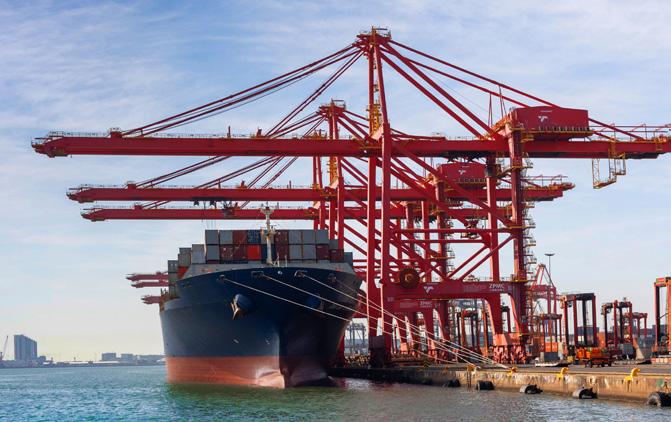
    Transnet has reported continued improvement across South Africa’s port system, with vessel traffic increasing by 9% year on year during the 2025/26 financial year. The growth reflects ongoing operational recovery efforts and strengthening momentum across the organisation’s port operations.

    Transnet National Ports Authority (TNPA) recorded 8,630 vessel arrivals during the year, compared to 7,912 in the previous financial year. The increase marks an important milestone in Transnet’s Reinvent for Growth strategy, which focuses on improving operational efficiency and strengthening South Africa’s position as a competitive global trade gateway.

    The increase in vessel arrivals reflects improved coordination across the port system, supported by closer collaboration between TNPA and terminal operators, as well as ongoing efficiency improvements.

    Cargo throughput across TNPA’s eight commercial seaports increased by 4.2% to approximately 304 million tonnes, representing the strongest growth recorded since the 2011/12 financial year.

    Three of the five main cargo categories recorded strong growth, while breakbulk and liquid bulk volumes showed signs of gradual recovery.

    Automotive volumes recorded the highest growth, up 13.3%, while the Port of Durban exceeded its throughput targets. Container volumes also grew by 7.1%, surpassing annual budget expectations by 3.6%, largely driven by a 22% increase in citrus exports.

    Dry bulk cargo volumes increased by 4.2%, supported by export demand for chrome ore, magnetite and manganese commodities.

    Transnet Group Chief Executive Michelle Phillips said the growth reflected an improving economic landscape, supported by Transnet’s recovery initiatives and improvements in port and rail efficiencies.

    She added that Transnet remains focused on sustaining operational improvements, accelerating port infrastructure investment and implementing structural reforms to support continued trade growth and cargo movement through South Africa’s ports.

    Infrastructure projects across the port system continue to support future demand and improve operational resilience.

    At the Port of Durban, expansion plans are expected to significantly increase container-handling capacity, while upgrades at the Port of Cape Town, including container stack improvements and truck staging facilities, aim to improve efficiency and reduce congestion.